
Observations on the Rise of Facial Recognition Technology in Daily Life
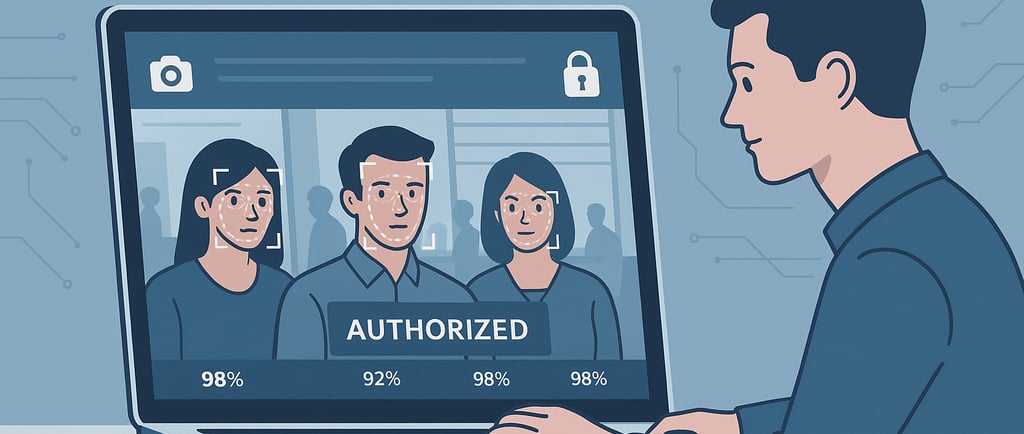
Face recognition is everywhere. Is it that complicated really to set it up?
Edina
11/9/20252 min read
The Emergence of Facial Recognition Software
In recent years, the advancement of technology has propelled the development of facial recognition software to the forefront of various industries. My personal journey into the realm of programming, particularly through my experience with Python, allowed me to witness the intricacies of writing such software. As I delved deeper, I became increasingly aware of how companies and governments alike are integrating this technology into their operations.
Real-World Applications Noticed During Travel
During my recent trip to the Seychelles, I encountered a tangible example of facial recognition technology in action. Upon arriving at the airport, I observed how facial recognition systems were utilized to verify passengers who had completed their travel documents. The system enabled a seamless transition for travelers as they proceeded to border control, showcasing how efficient and unobtrusive this technology can be. It was fascinating to see real-time applications of the software I had been working on, verifying identities with remarkable ease. I couldn't help but notice how they paid special attention to only letting one person at a time through the gate set up with the perfect lighting, exactly the challenges I faced while I was working on this myself.
Facial Recognition in the Era of COVID-19
The pandemic introduced a heightened sense of awareness around public health and safety. My travels took me to Dubai, where I noted another innovative implementation of facial recognition technology in malls. Here, systems were checking not just identities but also monitoring temperatures of individuals entering public spaces. This intersection of health monitoring and facial recognition addressed the urgent needs of the time while ensuring that public spaces remained as safe as possible.
Moreover, it is evident that facial recognition is being increasingly adopted at airports for passport control. The technology allows for verification without the need for human assistance, streamlining the process for travelers while enhancing security. This rapid adoption reflects a broader trend across industries, with applications ranging from traffic control to enforcing fines on highways.
As I continued to work on my facial recognition software, I faced numerous challenges that tested my programming skills and creativity. Each algorithm I wrote needed to balance accuracy with efficiency, making it imperative to choose the right frameworks and logic to achieve our goals. Witnessing the potential real-world applications of the technology I was developing served as both inspiration and motivation. Knowing that my work had direct relevance to ongoing societal changes pushed me to refine my approach continually. To name just a few of the most challenging parts of this was selecting the right camera, adjusting the camera settings that basically had nothing to do with my programming experience, setting up the appropriate lights where the camera is installed and of course the intricacies of the alrgorythms regarding to what we decide to be a good enough quality image.
In conclusion, my experiences navigating the world of facial recognition software have illuminated the significant role that this technology plays in contemporary society. From airport security to health monitoring in public spaces, the applications are vast and varied. While challenges persist in terms of privacy and ethics, the trend towards more widespread usage appears inevitable as the technology continues to evolve. If you were thinking about applying face recognition in your business, feel free to reach out and let's optimize business processes together.

Contacts
Mihai Vaman
mihai.vaman@protechsoftwarelabs.com
+971 58 513 5720
Useful links
Edina Moldvai
edina.moldvai@protechsoftwarelabs.com
+971 58 513 9157
© 2026 ProTech Software Labs FZ-LLC, UAE. All Rights Reserved. Turning Startup Dreams into Fundable Reality.